

A $49 hoodie can be worth it when its construction holds up in the places hoodies usually fail, from the fleece surface to the seams. Check the fiber blend first, then look at the hood layers, ribbing, seam stitching, and fit. For cold-weather wear, those five details matter more than a new graphic or a seasonal trend.
Hoodies rarely stop being useful all at once. Fleece can pill, cuffs can lose their recovery, a single-layer hood can feel flimsy in wind, and seams can split where sleeves and pockets take repeated strain. The useful question is not whether a hoodie costs $49.19, but whether its materials and construction match the number of cold-day wears you expect from it.
5 things that decide how long a hoodie lasts
1. Start with the fabric blend and whether it is preshrunk
A 50% cotton, 50% polyester fleece blend combines cotton’s familiar hand feel with polyester’s dimensional stability. The Be Brave hoodie specification lists this 50/50 fleece as preshrunk, which means the garment has been treated to reduce later shrinkage. Preshrinking does not make a hoodie shrink-proof: hot washing and high dryer heat can still change the fit. Follow the garment’s care label, and use lower heat when keeping the original length matters.
2. Check whether the hood has two layers
A double-lined hood has two layers of fabric rather than one. That adds structure around the head and gives the hood more substance in cold wind. The Be Brave specification names a double-lined hood with a matching drawcord. A drawcord lets the wearer adjust the opening, while the extra fabric helps the hood hold its shape instead of collapsing flat.
3. Look closely at the cuffs and hem
Ribbed cuffs and a ribbed hem do the practical work of keeping sleeves and the body of the hoodie in place. Spandex in the rib knit improves stretch recovery, so the opening can return closer to its starting shape after being pulled over hands or pushed up the forearm. The Be Brave specification lists ribbed cuffs and hem with spandex; inspect these areas before purchase because stretched ribbing is difficult to restore at home.
4. Turn the garment over and find the seam construction
Double-needle stitching uses two parallel lines of stitching at a seam or edge. On a hoodie, that extra row matters at high-use points. Check the armhole and shoulder, then look where the pocket attaches. The Be Brave hoodie specification calls out double-needle stitching at its most-worn seams. It cannot prevent every snag or tear, but it is a checkable sign that seam reinforcement was considered.
5. Choose a fit that leaves room for the way you dress
A unisex, true-to-size hoodie cut for layering should fit over a T-shirt and under a jacket without pulling across the shoulders. The Be Brave size range runs from S through 5XL. Choose your regular size for the stated fit; go up one size only when you want extra room for a lounge fit or a thicker layer. When buying graphic hoodies for men, check the shoulder seam first. Sleeve length is also more useful than the size letter alone.
Where a 50/50 fleece blend is the wrong choice
A 50/50 cotton-polyester fleece blend is less breathable than a lightweight, 100% cotton layer, so it fits cold walks, porches, and cool homes better than warm rooms or active indoor exercise. The right choice depends on where the hoodie will be worn. If you tend to feel overheated indoors, test the layer with a T-shirt underneath before removing tags or washing it.
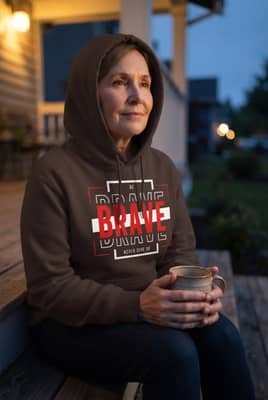
How to calculate the cost per wear
Cost per wear is a planning tool, not a promise about durability. Divide $49.19 by the number of times you expect to wear the hoodie. At 25 wears, the cost is $1.97 per wear; at 50 wears, it is $0.98 per wear; at 100 wears, it is about $0.49 per wear. Choose a number based on your own winters, laundry routine, and whether you rotate several sweatshirts.
| Wears you expect | $49.19 divided by wears |
|---|---|
| 25 wears | $1.97 per wear |
| 50 wears | $0.98 per wear |
| 100 wears | $0.49 per wear |
What a practical hoodie fit looks like outdoors
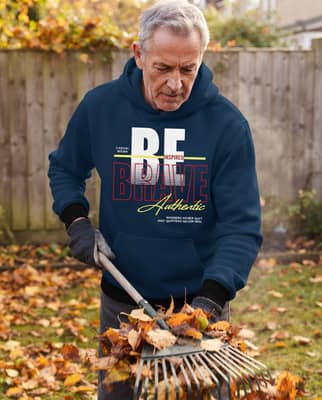
A hoodie earns its place when it works during ordinary tasks: walking the dog, collecting the mail, or clearing leaves on a cold afternoon. A kangaroo pocket gives hands and a phone one predictable place, while cuffs that stay close to the wrist are easier to manage when sleeves are pushed up. If you are building a small cold-weather rotation, these three easy ways to style a graphic hoodie for men show how one layer can work across a real week.
A quiet graphic can have a purpose
Printed apparel does not need to be loud to be meaningful. A short phrase can be a private cue on a difficult morning, rather than a message performed for other people. The wording “Be Brave. Never Give Up.” is best read in that modest sense; for a fuller interpretation, see a gentler reading of “Never Give Up”. When comparing unixex hoodies, start with the same five checks. Then decide whether the design is one you will still want to reach for next winter.
For someone who wants a warm, long-lasting layer with a quiet personal reminder, the Be Brave hoodie is a considered next step.


