

The question under our Halloween Facebook posts was rarely just “which design?” It arrived with a second line: “Which one should I pick, and what size?” One thread circled around a Royal blue hoodie, a gift recipient’s usual fit, and whether the artwork would still sit well across the chest. We stopped treating that as a quick reply and started treating it as part of the making.
For a Halloween gift, the person asking in public is often doing two things at once: checking the detail they cannot see from one photo and letting other people add the detail they have learned from their own closets. The useful part was not a perfect answer from us. It was the back-and-forth around one specific worry.
The comment thread that changed our notes
A Royal blue hoodie gave the question a clear shape. The color was already chosen; the uncertainty was fit. Before we answered, we looked at the blank in front of us: how it hung rather than lay flat, where the chest area began, and how the print read when the fabric had natural folds. A centered file on a screen can look different once a hoodie moves with shoulders, arms, and a front pocket.
We now keep that distinction in our working notes. “Centered” is not the end of the thought. We also ask whether the design has room to read on the chest and whether its edges stay clear of the seams and pocket area when the garment is worn. That is the small, practical check behind the words in a comment reply.
It also changed how we talk about the two directions people raised for October: a motivational quote tee or a colorful animal-art tee. The first puts the words out front. The second lets the animal image carry the first glance. In the thread, people could name what they knew about the recipient instead of trying to decode a product description alone.
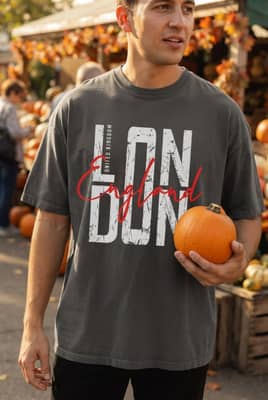
A pumpkin stand at midday is a better test of a tee than a perfectly still mockup. There is a hand holding something, a shoulder turned toward a friend, and fabric that wrinkles where fabric wrinkles. That is why we pay attention to a print’s placement on a worn garment, not only to its placement in the design file.
What we put back to the group
We did not turn the comments into a vote or tell anyone there was one right choice. We put the two design directions back in plain language: is this person more likely to reach for words, or for wildlife art? The replies made room for the details that matter in a gift, including what someone wears on a porch at dusk and what they pull on during an ordinary November walk.
That is the same question behind our post on the Halloween hoodie that kept getting worn in November. A seasonal image has to live beside a person’s usual clothes after October 31. We also came back to the idea in our guide to spooky-adjacent wildlife tees and hoodies, where the setting changes but the question stays close to home: will this feel like them?
People sometimes arrive through the search phrase unixex hoodies, and the comments tell us why a label alone does not settle a fit question. A word on a page cannot show drape, print position, or the difference between a garment lying flat and one worn on a real body. The question in the comments gives us a place to address the visible details we can check.
What changed after the replies
Our notes now start with the parts commenters asked about: garment color, the way the blank falls, and how the artwork sits at chest level. For tees, we look for a print that remains clear when the fabric has the small creases of a normal day. For hoodies, we look at the chest area with the pocket and seams in view. Those are not dramatic changes, but they keep a reply tied to the actual garment rather than a generic assurance.
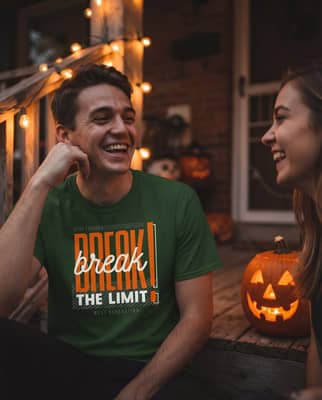
We also keep the design conversation open longer. A quote and a wildlife image can both belong at Halloween without being the same kind of gift. A lit jack-o’-lantern, warm porch lights, and a tee that still reads from a few steps away make a different scene from a Royal blue hoodie on a leaf-strewn waterfront path. The point is not to rank them. It is to give the person asking enough detail to recognize their friend in one of them.
Frequently asked questions
How do I ask about hoodie sizing in a Facebook comment?
Start with the garment color and the fit concern you can see: a Royal blue hoodie, for example, plus a question about chest placement or drape. Add what you know about the recipient’s usual preference if you know it. That gives the reply a concrete garment to discuss rather than a vague request for a size answer.
Should I choose a quote tee or animal art tee for a Halloween gift?
Use what the recipient already reaches for as the starting point. A quote tee puts a message at the center of the design, while animal art begins with the image. In our Halloween threads, that simple distinction gave people a useful way to describe the recipient without reducing the choice to a generic seasonal rule.
Why does print placement matter on a hoodie?
A hoodie has a chest area shaped by seams, the front pocket, and the way the fabric falls while worn. A design that appears centered in a flat digital file still needs to read clearly on the garment itself. We check the visible chest area before describing a hoodie in a reply.
Can I ask a public question before choosing a Halloween gift?
Yes. A public question can bring in details that one person may not think to ask, such as whether the recipient prefers words or artwork, or what they usually wear on a late-October evening. The best part of the thread is often the specific context people add around the original question.
If you are the friend who asks before choosing, follow along for the next question thread and bring the detail you are weighing.


