

Most 'wolf t shirts for men' lean on the same image: a lone wolf, head back, howling at the moon, alpha of the pack by force. That's not how wild wolf packs actually work, and it's not what the howl is for. In 1999, biologist L. David Mech, the same researcher who introduced the term 'alpha wolf' in the 1970s, published a retraction after years spent studying wild packs in Yellowstone and Denali. His original data came from wolves held in captivity, where unrelated animals compete for rank. Wild packs are family groups, and the howl isn't a threat display, it's how a scattered pack finds its way back to each other across miles of terrain.
The alpha framing isn't invented from nothing. Within a pack there is a breeding pair, and that pair does make the calls on when to move, hunt, or rest. What's wrong is reading that structure as dominance through volume. In Yellowstone's reintroduced packs, the lead pair stays quiet more often than it postures, because posturing is expensive and a pack can't hunt divided.
What does 'Born To Lead' actually mean on a wolf tee?
On this wolf tee, 'Born To Lead' points to coordination, not conquest. A wolf's howl carries over several miles so a pack that's spread out hunting can regroup before dark. The graphic reframes leadership as the member who keeps a group together, not the one who talks the loudest in a room.
That idea gets more room to breathe in The Howl Is Coordination: The Making of a Motivational Wolf Shirt, which walks through how the design translated that behavior into print. For readers weighing it against a quieter alternative in the same lineup, How to Choose a Calm, Motivational Wolf Shirt (That They'll Actually Wear) covers the decision in practical terms.
The fabric and fit behind the message
Men's graphic tees range from thin jersey to something that holds up. This one is built on the Comfort Colors 1717 blank: 100% ringspun cotton, garment-dyed, meaning the fabric is dyed after it's sewn rather than before, so the color and the slightly worn-in hand show up on day one instead of after ten washes. The weight sits in heavyweight territory, around 6.1 ounces per square yard, enough to drape rather than cling. Double-needle stitching runs the sleeves and hem, and the collar is seamless rib so it won't dig into the back of your neck under a jacket.
For fit, measure around the fullest part of your chest with the tape level, then compare that number to the flat garment measurement rather than relying on the tag size alone: a 44-inch chest usually lands in a large on this cut, a 48-inch chest in an XL. Because the fabric is garment-dyed and pre-shrunk before cutting, shrinkage after a cold wash tends to run closer to half an inch in length, not the full inch some cotton tees lose on a first hot wash.
When a heavyweight tee beats a hoodie on a cool day
A hoodie is the obvious reach once the temperature drops, but a heavyweight tee covers more of the calendar than it gets credit for. Under an open flannel at 45 to 55 degrees, the tee does the warmth work while the flannel blocks wind, and the shirt's weight keeps it from going sheer against lamplight or a fire pit's glow.
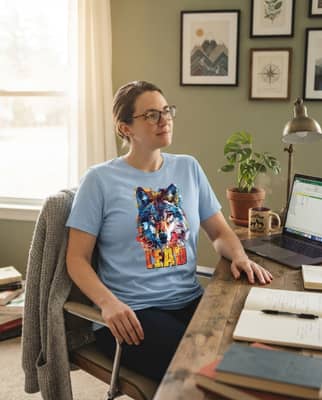
Indoors, most offices run 68 to 72 degrees, warm enough that a hoodie becomes something you peel off and drape over a chair by mid-morning. A tee at this weight stays comfortable through a full day at a desk without needing a layer at all, and it reads less casual than a hoodie does across a conference table.
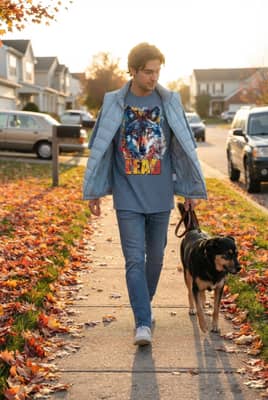
On weekend errands, around 50 to 60 degrees, a tee under a light quilted vest or an unzipped jacket handles the walk between the car and the store without the bulk of a hoodie's hood bunching at the neck.
Washing and care that keep the color and drape
Garment-dyed cotton holds its color best in cold water, turned inside out so friction in the wash doesn't work directly on the printed side. Skip the dryer's high heat setting if you can; low heat or hanging to dry keeps the rib collar from tightening and the body from drawing up at the hem. Washed this way, the fabric keeps softening slightly over time instead of pilling.
Frequently asked questions
What size should I order in a men's wolf tee?
Measure your chest at its fullest point, not your usual shirt size. On a Comfort Colors 1717 build, a 40 to 42 inch chest typically fits a medium, 44 to 46 a large, and 48 to 50 an XL. If you plan to layer it under a flannel regularly, sizing up one step gives more room to move without the shirt riding up at the waist.
Can a tee replace a hoodie for cool weather?
For temperatures above roughly 45 degrees and with a jacket, vest, or flannel on hand, yes. A heavyweight tee plus an open layer covers most fall days. A hoodie earns its place once wind picks up or temperatures drop further, or when there's no second layer planned for that day.
How long does a made-to-order wolf tee take to ship?
Made-to-order apparel is printed after the order comes in rather than pulled from a shelf, so production typically adds a few days before the shipping clock starts, on top of standard transit time. Checking the specific processing window listed at checkout avoids surprises around a gift date.
Will a garment-dyed tee fade faster than a regular print?
Garment-dyeing actually works the opposite way for most wearers: because the fabric is dyed whole after sewing, the color settles into the fibers before the first wash rather than sitting on top waiting to crock off. Washing cold and inside out slows fading further, regardless of dye method.
None of that changes what the shirt is actually for: a reminder that keeping people together counts as leading, even when nobody's shouting about it. If that's closer to how you lead than the loud version ever was, the Born To Lead wolf tee is worth a look as your next layer this season.


